10 Fascinating Facts About the Tarantula Wasp
The tarantula hawk wasp, often simply called the tarantula wasp, is a fascinating and formidable insect. Known for its striking appearance and brutal hunting habits, this wasp is a true marvel of the natural world. This article delves into 10 captivating facts about the tarantula wasp, exploring everything from its physical characteristics and hunting techniques to its lifecycle and ecological role. Prepare to be amazed by this incredible creature and gain a deeper understanding of its place in the intricate web of life. These wasps are not only impressive hunters but also play an essential role in controlling the tarantula population, keeping the ecosystem balanced. Discover why the tarantula wasp is one of the most intriguing insects on the planet.
What is a Tarantula Wasp
The tarantula hawk wasp (Pepsis grossa and related species) is a solitary wasp known for its exceptionally painful sting and its unique hunting behavior. These wasps are typically found in warm regions, particularly in the southwestern United States, and are easily recognizable due to their large size, striking colors, and long legs. Their primary prey is, as the name suggests, tarantula spiders. The wasp paralyzes the spider with its venom and then uses the paralyzed tarantula as a host for its larvae. This extraordinary survival strategy makes the tarantula wasp a remarkable example of natural adaptation and predator-prey relationships. The wasp’s lifecycle revolves around this single, dramatic act of hunting and reproduction, showcasing the raw power and efficiency of nature.
Appearance and Identification

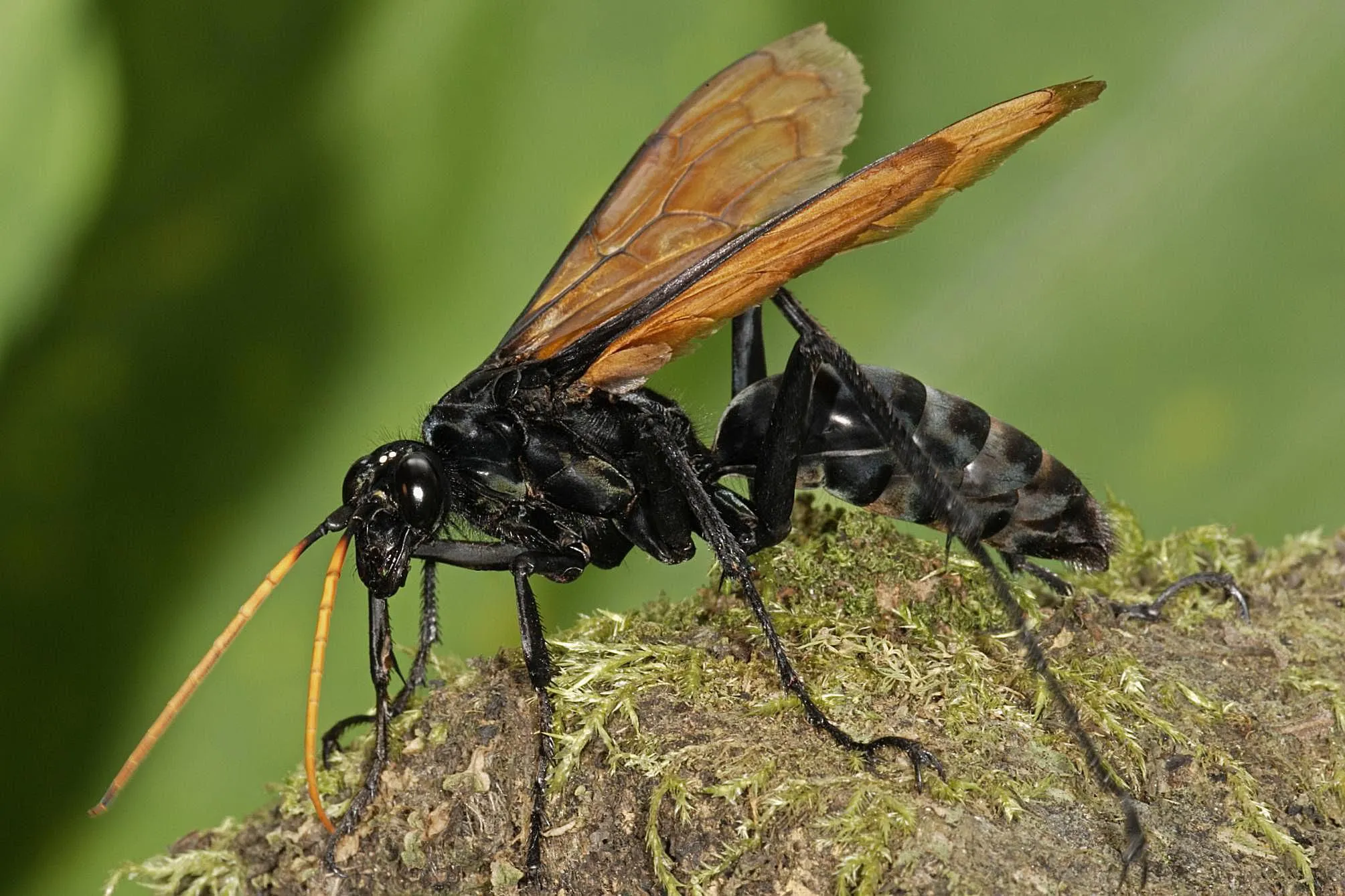
Tarantula wasps are among the largest wasps in the world, with females often reaching over two inches in length. They have a distinctive appearance, with a black or dark blue body and vibrant orange or rusty-red wings. Their long, spidery legs are adapted for navigating the terrain and handling their prey. The wasps also possess a potent stinger, which they use to paralyze tarantulas. Males and females can be differentiated by their antennae and overall size. Males are generally smaller, while females are larger and have a more robust build, essential for carrying and managing the tarantula. The striking color combination serves as a warning, signaling their powerful sting, a feature that contributes to their survival and predatory success in the ecosystem.
Habitat and Distribution
Tarantula wasps are primarily found in the southwestern United States, Mexico, and parts of South America. They prefer arid and semi-arid environments, such as deserts, scrublands, and open woodlands, where tarantulas are abundant. These wasps are well-adapted to these harsh conditions, exhibiting behaviors that help them conserve energy and regulate their body temperature. They build nests in the ground or in pre-existing cavities, often near tarantula burrows, to make the hunting process easier. This proximity to their prey is a key factor in their distribution and survival. Their habitat preferences reflect their specialized lifestyle and the need for a stable food source, the tarantula, which enables them to thrive in these challenging environments.
The Hunting Process
The hunting process is the most remarkable aspect of the tarantula wasp’s behavior. The female wasp locates a tarantula, often by scent, and engages in a fierce battle. She uses her powerful sting to paralyze the spider, injecting venom into its nerve centers. This paralyzes the tarantula, but does not kill it. The wasp then drags the paralyzed spider back to its nest, a feat of strength that can involve carrying a spider many times her own size. This arduous journey highlights the wasp’s dedication to its offspring. This strategic approach, using both strength and precision, makes the tarantula wasp an exceptionally effective hunter. The wasp’s methodical and efficient approach to hunting is a marvel of biological engineering.
The Tarantula Wasp’s Prey

As the name implies, tarantulas are the primary prey of the tarantula hawk wasp. The wasps target a variety of tarantula species, selecting spiders that are large enough to provide a suitable host for their larvae. The spider’s size determines the size of the wasp larvae and its chance of survival. The wasp’s hunting success depends on its ability to overcome the tarantula’s defenses and its strategic selection of prey. The tarantula, when captured, provides the wasp’s larvae with a continuous food supply, guaranteeing that they can fully develop. The wasp’s specialization on this single prey demonstrates a refined evolutionary adaptation.
Sting and Venom
The tarantula hawk wasp is famous for its incredibly painful sting, often ranked as one of the most painful stings in the insect world. The venom is not lethal to humans, but it causes intense pain that can last for several minutes. The wasp’s sting is primarily used to paralyze tarantulas, allowing the wasp to transport its prey to the nest. Although the sting can be painful, the wasp is generally not aggressive towards humans, stinging only when provoked or threatened. The venom contains a complex mix of neurotoxins designed to paralyze the spider. The sensation of the sting has been described as excruciating, demonstrating the wasp’s efficient defense mechanism.
The Lifecycle of a Tarantula Wasp
The tarantula wasp’s lifecycle is a fascinating example of parasitoid behavior. It begins with the female wasp searching for a tarantula, which she then stings and paralyzes. Once the spider is immobilized, the wasp drags it to a prepared nest, typically a burrow or a hole in the ground. The wasp then lays a single egg on the spider’s abdomen, sealing the burrow to protect the spider and the egg from predators. The wasp’s lifecycle exemplifies a delicate balance between predator and prey, where each stage is carefully orchestrated. The entire process showcases the intricate relationship between the wasp and its host, highlighting the sophistication of natural selection.
Mating and Reproduction

Mating typically occurs in the spring or summer. Male tarantula wasps establish territories, often on prominent features such as rocks or vegetation, to attract females. After mating, the female wasp begins her quest to find a tarantula and continues the cycle. The male wasps are much smaller than females and do not participate in hunting or caring for the larvae. The success of the lifecycle depends on a carefully orchestrated process. This mating ritual ensures that the genes of the species are passed on. The careful mating rituals and territorial behavior enhance the likelihood of successful reproduction.
Larval Stage and Development
Once the wasp egg hatches, the larva begins to feed on the paralyzed tarantula. The larva consumes the spider alive, starting with the non-essential parts. This slow feeding ensures that the tarantula remains fresh for as long as possible, providing the larva with a continuous food source. As the larva grows, it molts several times. After several weeks, the larva pupates within a cocoon, undergoing a transformation that eventually results in a fully formed adult wasp. This larval phase represents the period of most intense growth and development. The transformation process is a remarkable demonstration of biological development.
Behavior and Temperament
Despite their fearsome reputation, tarantula wasps are generally not aggressive towards humans unless provoked. They are solitary insects, and their primary focus is on hunting and reproduction. When threatened, they will sting in defense. The wasps are highly specialized in their hunting behavior, showing a remarkable instinct to locate and subdue tarantulas. The wasps spend considerable time searching for a suitable host. Understanding their behavior is important for both appreciating their role in the ecosystem and avoiding unnecessary encounters. Their behavior is characterized by patience, precision, and a strong survival instinct.
Defensive Mechanisms

The tarantula hawk wasp has several defensive mechanisms. Their potent sting is the primary defense against predators and, of course, its prey. The bright coloration serves as a warning signal, alerting potential predators to the danger. They are also capable of delivering multiple stings, if necessary. The wasps are agile fliers, able to quickly evade threats. The defensive capabilities of the tarantula wasp enable them to protect themselves. These defensive strategies ensure the wasp’s survival, allowing it to continue its vital role in the ecosystem.
Interactions with Humans
Tarantula wasps rarely interact with humans unless they are disturbed. Their stings, while intensely painful, are not typically life-threatening to humans. They are generally not aggressive and will only sting in self-defense. The presence of these wasps is often seen as an indication of a healthy ecosystem, where tarantulas and other insects thrive. Encounters are usually limited to the areas where they inhabit. These wasps are not usually a threat to humans. The tarantula wasp demonstrates the importance of appreciating the natural world and coexisting with its diverse inhabitants.
Conservation Status and Threats
The tarantula hawk wasp is not currently considered to be endangered. However, like all species, they face threats from habitat loss, pesticide use, and climate change. The tarantula wasp’s survival depends on the health and stability of their ecosystem. Understanding these threats is critical for implementing conservation efforts. Maintaining a balanced ecosystem is essential for ensuring the survival. These threats emphasize the need for conservation.
Importance in the Ecosystem

Tarantula hawk wasps play a crucial role in the ecosystem, primarily as a predator of tarantulas. By controlling the tarantula population, they help maintain a balance within their habitat. They also contribute to pollination, as they feed on nectar, and they serve as a food source for other animals. The ecological role demonstrates how important their presence is in the ecosystem. Their role is vital for biodiversity and overall ecosystem health. Preserving these insects has a positive impact on nature.
Threats and Conservation Efforts
The major threats to tarantula hawk wasps include habitat destruction, pesticide use, and climate change. Deforestation, urbanization, and agricultural expansion all reduce the wasps’ natural habitats. Efforts to protect these wasps focus on habitat preservation, sustainable land management, and reducing pesticide use. Education and awareness campaigns are important for helping the public understand the value of these insects. Conservation efforts are essential to protect the habitat.
Frequently Asked Questions
Here are answers to some common questions about tarantula hawk wasps:
What does a tarantula hawk wasp eat? Primarily, the wasp’s larvae eat the paralyzed tarantula.
How painful is a tarantula hawk wasp sting? The sting is considered one of the most painful in the insect world, but the pain is short-lived.
Are tarantula hawk wasps aggressive? Generally, they are not aggressive towards humans, stinging only when threatened.
Where do tarantula hawk wasps live? They are found in warm regions, such as the southwestern United States and Mexico.
What is the lifecycle of a tarantula hawk wasp? They go through several stages, from egg to larva to pupa, before emerging as an adult. The tarantula wasp’s lifecycle and habits are a continuous source of fascination. The responses to these FAQs enhance understanding of the tarantula wasp.