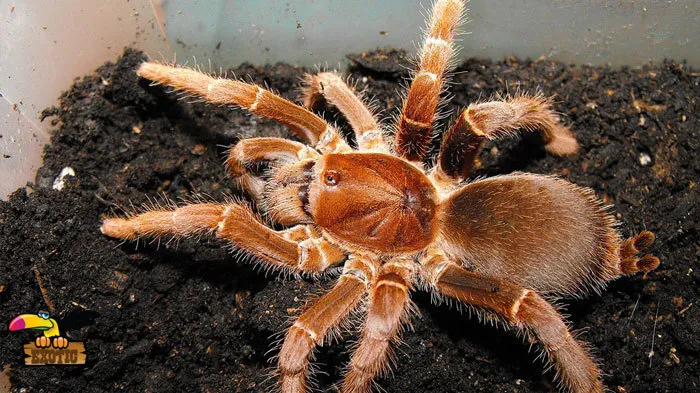
What is the King Baboon Tarantula?
The King Baboon Tarantula ( Pelinobius muticus) is a captivating species of tarantula native to the savannas and grasslands of East Africa. Known for its striking appearance and relatively docile temperament, this spider has become a popular choice among tarantula enthusiasts. Its name is derived from the arrangement of the legs, which resemble a baboon’s fingers, and the powerful nature that reminds of the king. The King Baboon Tarantula is a terrestrial species, meaning it primarily lives on the ground. They are burrowers by nature, creating elaborate underground tunnels and chambers that provide shelter from the harsh African climate and protection from predators. These spiders are a fascinating example of adaptation and resilience in the animal kingdom and can be found across different parts of Africa.
Appearance and Characteristics of the King Baboon Tarantula
The King Baboon Tarantula is a medium to large-sized spider, distinguished by its robust build and unique coloration. They typically exhibit a dark brown or reddish-brown coloration, with a carapace (the top shell of the cephalothorax) that can range from tan to a darker hue. One of the most distinctive features of this species is the presence of stout, powerful legs covered in short, dense hairs, giving them a somewhat velvety appearance. These legs are not only crucial for locomotion and climbing but also serve as sensory organs, allowing the tarantula to detect vibrations and navigate its surroundings. The chelicerae, or mouthparts, are large and prominent, equipped with strong fangs used for capturing and subduing prey. Overall, the King Baboon Tarantula possesses a commanding presence, reflecting its status as a formidable predator within its ecosystem.
Size Variations in King Baboon Tarantulas

The size of a King Baboon Tarantula can vary depending on several factors, including the individual spider’s genetics, sex, and environmental conditions. However, it is generally accepted that they are a medium to large-sized tarantula species. Adults typically have a leg span ranging from 5 to 7 inches (13 to 18 cm). The body length can vary but is usually between 2 to 3 inches (5 to 7.5 cm). This measurement refers to the size of the cephalothorax and abdomen, excluding the legs. While the size can differ slightly among individuals, these ranges provide a general understanding of the dimensions to expect. It’s important to note that size alone isn’t the only indicator of a tarantula’s health or well-being; other factors, such as the spider’s activity level, appetite, and overall appearance, can also be informative.
Factors Influencing King Baboon Tarantula Size
Several factors influence the ultimate size a King Baboon Tarantula can achieve. One of the primary determinants is the availability of food. A consistent and nutritious diet, comprising a variety of insects such as crickets, mealworms, and roaches, supports optimal growth. Furthermore, the environment plays a critical role. Maintaining the proper temperature and humidity levels are essential for the tarantula to thrive and molt successfully, which is a crucial part of their growth process. Genetics also play a significant role, as some individual tarantulas may be genetically predisposed to grow larger than others. Moreover, the frequency of molting, which is influenced by factors such as age and feeding, directly impacts their growth rate. Adequate space within the enclosure allows them to move and grow freely, contributing to their overall well-being and size. These factors interact in complex ways to influence the final size attained by a King Baboon Tarantula, making each individual unique.
Diet and Nutrition Impact on Size
A King Baboon Tarantula’s diet and nutritional intake significantly influence its size and overall health. A balanced diet is vital for supporting proper growth and development. Tarantulas require a diet rich in protein and other essential nutrients. This can be achieved by feeding them a variety of insects such as crickets, mealworms, and roaches. The size of the prey should be appropriate for the tarantula’s size; juveniles require smaller insects, whereas adults can consume larger ones. The frequency of feeding also matters; juveniles should be fed more often than adults, as they are actively growing. In addition to the type and frequency of food, the quality of the food is essential. Providing insects that have been well-fed themselves (gut-loaded) ensures that the tarantula receives a higher concentration of nutrients. Supplementing the diet with occasional vitamins or minerals, as recommended by a veterinarian or experienced tarantula keeper, can further support their health and growth. A well-managed diet is a cornerstone of raising a healthy and thriving King Baboon Tarantula.
The Role of Genetics in Tarantula Size

Genetics play a fundamental role in determining the potential size of a King Baboon Tarantula. Just as in other animal species, the genetic makeup of an individual tarantula sets the upper limits for its growth. Some tarantulas may be predisposed to grow larger than others, even when provided with the same environmental conditions and diet. Selective breeding programs, which are sometimes practiced by experienced tarantula keepers, can potentially enhance this genetic influence, leading to larger specimens over generations. It’s important to note, however, that genetics alone do not entirely dictate size. The expression of these genes is influenced by environmental factors, such as nutrition, temperature, and humidity. Therefore, while genetics provide the blueprint, external influences determine how closely the tarantula adheres to its genetic potential. Careful observation of the tarantula’s lineage can provide insights into its potential size, but it remains just one factor among many that influence its growth.
How to Measure a King Baboon Tarantula
Accurately measuring a King Baboon Tarantula requires a gentle approach and careful technique. Since tarantulas are delicate creatures, handling them should be minimized, especially during molting or when they seem stressed. The most common method for measuring a tarantula is to measure its leg span. To do this, gently place the tarantula on a flat surface and measure the distance between the tips of the longest legs on opposite sides of the body. Be careful not to force the legs open, as this can cause injury. Another measurement to consider is the body length, which is the distance from the front of the cephalothorax to the end of the abdomen. A flexible ruler or measuring tape can be used for this measurement. Documentation of the measurements over time provides valuable insight into the tarantula’s growth. Always prioritize the tarantula’s safety and well-being during the measuring process, and avoid any actions that could cause stress or harm.
Top 5 Facts about King Baboon Tarantula Max Size
Fact 1 Average Size

The average leg span of an adult King Baboon Tarantula typically ranges from 5 to 7 inches (13 to 18 cm), making them a medium to large species of tarantula. Body length often falls between 2 to 3 inches (5 to 7.5 cm). These measurements are averages, and individual sizes can vary based on genetics and environmental conditions. Male King Baboon Tarantulas often tend to be slightly smaller than females, a phenomenon known as sexual dimorphism. Despite these general size guidelines, a King Baboon Tarantula’s size is only one aspect of its overall health and well-being; other factors like activity levels, appetite, and general appearance play an essential role.
Fact 2 Sexual Dimorphism
Sexual dimorphism, the differences in physical characteristics between males and females of the same species, is evident in King Baboon Tarantulas. Females tend to be larger than males, with a more robust build and a longer lifespan. Males, after their final molt, often have a shorter lifespan and typically do not grow as large as females. They use the spermatheca, which is located in the female abdomen, for reproduction. The size difference becomes more apparent as the tarantulas mature, making it possible to distinguish the sexes based on size and other physical features. These differences are natural adaptations, with larger females potentially producing more eggs and better able to protect themselves and their offspring. Examining the size and characteristics can help distinguish between male and female King Baboon Tarantulas, although these can sometimes be challenging to identify.
Fact 3 Environmental Influences
Environmental factors significantly influence the ultimate size of a King Baboon Tarantula. Providing the correct temperature and humidity is essential for the spider to thrive and grow. Proper temperature allows for efficient metabolism, while humidity aids in molting. A consistent and nutritious diet, rich in protein and a variety of insect species, supports optimal growth. The size and quality of the food offered are also critical factors. Adequate space within the enclosure allows them to move and grow freely, contributing to their overall well-being and size. Proper housing conditions, including substrate depth and appropriate hiding places, also contribute to the tarantula’s health and reduce stress, which can indirectly affect size. A well-maintained environment is essential for raising a healthy and thriving King Baboon Tarantula, maximizing its potential size.
Fact 4 Growth Stages

King Baboon Tarantulas go through several growth stages, or instars, as they develop. These instars are marked by molting, a process where the tarantula sheds its exoskeleton to grow. Juveniles molt frequently, sometimes every few weeks, which reflects their rapid growth phase. As they mature, the frequency of molting decreases. Adults molt less often, sometimes only once a year or even less. Each molt allows the tarantula to increase in size. The timing of molting can be influenced by factors such as temperature, humidity, diet, and overall health. Proper care and understanding of these growth stages help keepers provide for the tarantula’s needs during each stage, ensuring its well-being and allowing it to reach its full size potential. Molting is a critical aspect of the tarantula’s life cycle, and observing the process can offer insight into the spider’s health and growth.
Fact 5 Comparison with Other Tarantula Species
Compared to other tarantula species, the King Baboon Tarantula is a medium to large-sized tarantula. While not one of the largest species, it is still a formidable spider. In terms of size, it is comparable to species like the Brazilian Black or the Chilean Rose Hair tarantula. However, it is generally smaller than giants such as the Goliath Birdeater (Theraphosa blondi). Variations in size are common across different tarantula families and geographical locations. The King Baboon Tarantula’s size is a testament to its robust build and powerful nature. While size is a factor, factors such as temperament, venom potency, and behavior also set it apart from other tarantula species. Comparing the King Baboon Tarantula to other species provides valuable context and allows keepers to appreciate its unique characteristics within the broader tarantula world.