Understanding the Tarantula Hawk Wasp
The tarantula hawk wasp is a remarkable insect, known for its striking appearance and its formidable hunting prowess. Belonging to the family Pompilidae, these wasps are solitary creatures with a reputation that precedes them. They are primarily known for their practice of preying on tarantulas, using them as hosts for their larvae. Identifying these wasps can be crucial for those who may encounter them in their natural habitats, allowing for informed decisions and an appreciation for their unique role in the ecosystem. This guide offers valuable insights into identifying these fascinating creatures easily.
What is a Tarantula Hawk Wasp
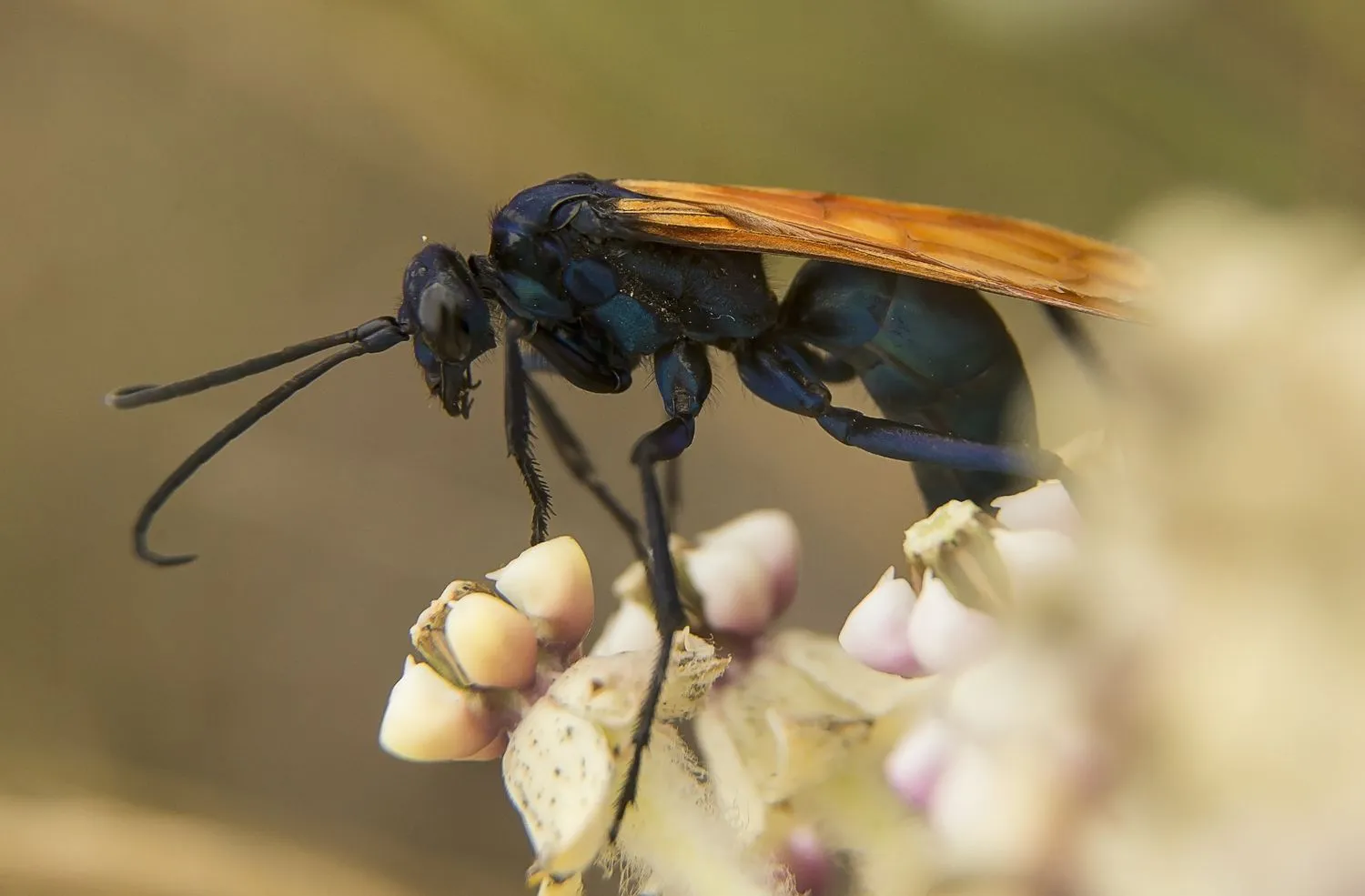
The tarantula hawk wasp is not your average wasp. It is one of the largest wasps in the world, with a body length that can exceed two inches. They are distinguished by their vivid coloration, often showcasing metallic blue-black bodies and bright orange or rusty-red wings. These wasps are ectoparasitoids, meaning their larvae develop on the outside of a host’s body. They are highly specialized hunters, with a particular fondness for tarantulas. Their sting is considered one of the most painful stings in the world, though they are generally not aggressive unless provoked. Understanding their nature is the first step to identifying them.
Appearance and Features

One of the easiest ways to identify a tarantula hawk wasp is by its distinctive appearance. They have a robust build and powerful legs, perfect for maneuvering on the ground and carrying their prey. The metallic blue-black body is a common feature, with the vibrant orange or rusty-red wings being another key identifier. Their antennae are long and slender, used for sensing their environment. The females are generally larger than the males and possess a stinger used for paralyzing their prey. Recognizing these features helps differentiate them from other wasp species.
Key Identification Markers
Several specific markers can help in identifying the tarantula hawk wasp. Beyond the overall appearance, there are details to observe. The color combination is a primary indicator, but variations can occur. Focusing on these markers allows for accurate identification. It is also important to consider the location and habitat where you are observing the wasp. Other species may look similar, but these are the key features that set the tarantula hawk wasp apart.
Size and Coloration
The size and coloration of the tarantula hawk wasp are crucial identifiers. These wasps are typically large, with females being particularly hefty. Their body length can range from 1 to 2 inches or more. The metallic blue-black body contrasts sharply with the bright orange or rusty-red wings, creating a striking visual. Look for this distinct color combination. The vibrant wings are a significant characteristic, and the size of the wasp helps distinguish them from smaller, less formidable species.
Distinguishing from Similar Species

When identifying a tarantula hawk wasp, it’s important to distinguish it from other similar-looking species. Other wasp species may share some visual characteristics. Observing the size, overall body shape, and wing color will help narrow the possibilities. Additionally, knowing the geographic location and the typical habitats of tarantula hawk wasps is crucial. Use field guides or online resources to confirm the identification, and avoid any assumptions. Detailed observation is key when differentiating between similar species.
Habitat and Distribution of Tarantula Hawk Wasps
Tarantula hawk wasps are not found everywhere; understanding their habitat and distribution is essential for identification. These wasps thrive in specific environments, and their presence indicates a healthy ecosystem. By knowing where to look, one can more easily identify these fascinating creatures and appreciate their ecological role. Their habitat preferences and geographic range directly impact their presence.
Geographic Range
Tarantula hawk wasps are primarily found in the southwestern United States and parts of Latin America. They prefer warm, arid climates. Within the United States, they are commonly seen in states like Arizona, New Mexico, and Texas. Understanding the geographical range helps narrow down the possibilities. They are not commonly found outside of these regions. Knowing the location is a crucial step in the identification process.
Preferred Habitats

Tarantula hawk wasps prefer warm, dry habitats with sandy or gravelly soil. They are often found in deserts, scrublands, and open areas where tarantulas are likely to be found. These wasps require access to tarantulas for their life cycle and prefer environments that provide them with prey. Look for them near burrows or in areas where tarantulas are commonly sighted. Habitats with low vegetation and access to sunshine are also preferred. Identifying the habitat provides another clue in the identification process.
Identifying Tarantula Hawk Wasp Behavior
Observing the behavior of tarantula hawk wasps is a great way to confirm identification. Their hunting techniques and life cycle are remarkable. Recognizing their behavior provides additional clues. The wasp’s interactions with their prey are truly fascinating. Watching a tarantula hawk wasp in action can be a unique experience. These behaviors make them a unique species.
Hunting and Prey
The most recognizable behavior of the tarantula hawk wasp is its hunting of tarantulas. The female wasp will search for a tarantula, often in its burrow. After finding a tarantula, the wasp will sting the spider, paralyzing it. She then drags the paralyzed tarantula to a burrow, where she lays a single egg on the spider’s abdomen. The wasp larva then feeds on the living, but paralyzed, tarantula. This is a dramatic display of nature. It highlights the wasp’s specialized hunting behavior.
Stinging and Paralysis Techniques

The sting of the tarantula hawk wasp is infamous. It’s considered to be one of the most painful insect stings. The wasp uses its stinger to inject venom directly into the tarantula’s nervous system, which causes paralysis. This paralysis allows the wasp to drag the tarantula to its nest. Although the sting is exceedingly painful, it is not usually fatal to humans. However, one should always avoid provoking them.
Life Cycle of the Tarantula Hawk Wasp
Understanding the life cycle of the tarantula hawk wasp provides a deeper appreciation of this insect. From mating to larval development, the cycle is intriguing. Observing the complete cycle reveals how they interact with other species. This life cycle is essential to the wasp’s survival.
Mating and Nesting
Mating usually occurs after the wasp has emerged as an adult. The males will search for the females. The female will then begin the process of finding and paralyzing tarantulas. After the tarantula is paralyzed, the female wasp drags the spider to a nest, often a pre-existing burrow or a burrow she digs herself. She then lays a single egg on the paralyzed spider’s abdomen. The nest provides a safe place for the development of the larva.
Egg Laying and Larval Development

Once the egg is laid on the tarantula’s abdomen, the larva hatches and begins to feed on the paralyzed spider. The larva initially feeds on the non-essential parts of the tarantula. As the larva grows, it consumes the entire body of the tarantula. Eventually, the larva spins a cocoon. It then pupates within the spider’s burrow. The pupa undergoes metamorphosis. Finally, the adult wasp emerges from the cocoon. This completes the life cycle.
Importance of Tarantula Hawk Wasps
Tarantula hawk wasps play a significant role in their ecosystem. They are more than just impressive insects; they perform essential functions that help to maintain ecological balance. Appreciating these roles helps us understand why they are important. They have ecological significance.
Ecological Role
Tarantula hawk wasps are important predators and play a role in regulating tarantula populations. The wasps’ parasitic behavior helps to control tarantula numbers. They also serve as pollinators, although not to the extent of other insects. They contribute to biodiversity and are a critical part of the food web. Their presence contributes to the overall health of their ecosystem. The wasps’ predation keeps the ecosystem in balance.
Interactions with Humans

While the sting of a tarantula hawk wasp can be painful, they generally avoid conflict with humans. They are not aggressive unless provoked. If you are in an area where they are present, it is advisable to observe them from a distance and avoid any sudden movements that might be perceived as a threat. Education and understanding are key. By respecting these wasps, we can coexist. Protecting their habitat is vital for their survival.
In conclusion, identifying the tarantula hawk wasp requires attention to several key characteristics, including their distinctive appearance, behavior, and habitat. By understanding the aspects described, you can distinguish these wasps from similar species and appreciate their place in the ecosystem. Their unique role as predators and their impressive adaptations make them a fascinating subject of study and observation. Recognizing these wasps enhances our appreciation for the intricate web of life and the remarkable creatures that inhabit our planet.