
Choosing Your Golden Knee Tarantula
Bringing a Golden Knee Tarantula (Grammostola pulchripes) into your home is an exciting experience. These beautiful creatures, also known as Chaco Golden Knees, are popular pets due to their docile nature and striking appearance. However, before you acquire one, it’s crucial to understand their specific needs and how to select a healthy specimen. This guide will provide you with the essential knowledge needed to provide the best care for your Golden Knee, ensuring a long and fulfilling life for your new pet. From choosing the right tarantula to creating the perfect habitat, every aspect of their care is important.
Selecting a Healthy Tarantula
The first step in successful Golden Knee tarantula care is selecting a healthy individual. Look for a tarantula that is active and alert, not sluggish or unresponsive. The abdomen should be plump, not shriveled, indicating good hydration and nutrition. Avoid tarantulas that have visible injuries, such as missing legs or damaged fangs. Examine the tarantula’s overall appearance for any signs of parasites or diseases. A healthy tarantula will have a clean, shiny exoskeleton.
Identifying a Healthy Golden Knee
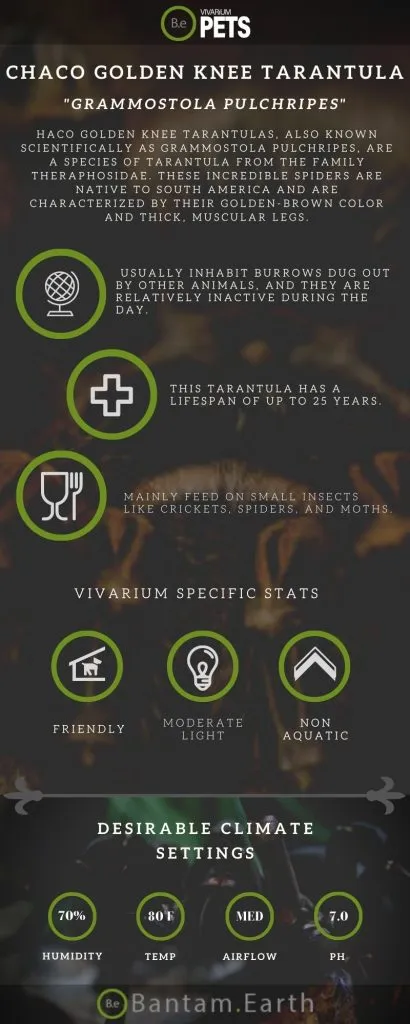
Pay close attention to the tarantula’s behavior. A healthy Golden Knee should move with purpose and not appear weak. Observe the tarantula’s posture and gait. The legs should be strong and capable of supporting the body. Check the chelicerae (fangs) to ensure they are intact and in good condition. Check for any visible signs of mites or other external parasites. If possible, inquire about the tarantula’s feeding habits and molting history. A healthy tarantula will have molted recently or be preparing to molt, which is a sign of growth and well-being.
Quarantine and Acclimation
Once you’ve selected your Golden Knee, it’s essential to quarantine it for a period of time, especially if you have other pets. This helps to prevent the spread of potential diseases or parasites. Keep the new tarantula in a separate enclosure and observe it closely for any signs of illness. Acclimate the tarantula to its new environment gradually. Provide a suitable habitat that meets its needs for temperature, humidity, and substrate. Avoid handling the tarantula excessively during the acclimation period to minimize stress. After the quarantine period, you can introduce it to your existing collection, if applicable, ensuring all other animals are healthy.
Setting Up the Perfect Habitat
Creating the right habitat is crucial for the well-being of your Golden Knee Tarantula. The enclosure should mimic its natural environment and provide a safe and comfortable space. Proper habitat setup ensures the tarantula’s physical and psychological health, making it essential for successful pet ownership. The setup involves choosing the right enclosure type, providing suitable substrate and furnishings, and maintaining the correct temperature and humidity levels. Remember, the goal is to create an environment where your tarantula can thrive.
Enclosure Size and Type

The size and type of enclosure are very important. A good rule of thumb is to provide an enclosure that is at least three times the tarantula’s leg span in width. For a juvenile Golden Knee, a ten-gallon tank or a similar-sized plastic container is suitable. As the tarantula grows, you’ll need to upgrade to a larger enclosure, such as a 20-gallon long tank or a custom-built enclosure. Ensure the enclosure has a secure lid to prevent escapes. The enclosure should have adequate ventilation to prevent the buildup of humidity and the growth of mold.
Substrate and Furnishings
The substrate is the material that covers the bottom of the enclosure. For Golden Knees, a substrate that retains moisture and allows for burrowing is ideal. Good options include a mix of peat moss, coconut fiber, and a small amount of vermiculite. The substrate should be deep enough for the tarantula to burrow if it chooses to. Furnishings such as a hide (e.g., cork bark, half log, or a commercially available hide) provide a sense of security and are essential for the tarantula’s well-being. Add some fake plants to provide cover and enhance the enclosure’s aesthetic appeal. Always ensure that any decorations are non-toxic and safe for your tarantula.
Temperature and Humidity
Golden Knee Tarantulas thrive in a temperature range of 75-85°F (24-29°C). Use a thermometer to monitor the temperature inside the enclosure. You may need a heat source, such as a heat mat or a low-wattage incandescent bulb, to maintain the appropriate temperature, especially in cooler environments. Humidity levels should be maintained between 60-70%. You can measure humidity with a hygrometer. Mist the enclosure lightly with water every few days to maintain humidity. Ensure good ventilation to prevent mold and mildew growth. Avoid placing the enclosure in direct sunlight, as it can overheat.
Feeding Your Golden Knee

Feeding your Golden Knee Tarantula is a straightforward process, but it requires attention to detail. Providing the right food, in appropriate amounts, and at suitable intervals is crucial for the tarantula’s health and growth. Understanding the dietary needs of your pet ensures it receives the necessary nutrients for optimal well-being. The choice of food, feeding frequency, and water availability all play significant roles in the tarantula’s health and vitality. A well-fed tarantula is a happy tarantula.
Appropriate Food Choices
Golden Knee Tarantulas are primarily insectivores. Their diet should consist mainly of live insects. Suitable options include crickets, mealworms, dubia roaches, and superworms. Varying the diet provides a wider range of nutrients. Avoid feeding wild-caught insects, as they may carry parasites or pesticides. The size of the prey should be appropriate for the size of the tarantula. As a general guideline, the prey should be no larger than the tarantula’s body length. It’s important to provide a varied diet, but the main staples should be easily obtainable and healthy insects.
Feeding Frequency and Amounts
Feeding frequency depends on the tarantula’s age and size. Spiderlings (young tarantulas) should be fed two to three times a week. Subadults can be fed once or twice a week. Adult Golden Knees may only need to be fed once every one to two weeks. Observe your tarantula’s feeding behavior. If it consistently refuses food, it may be preparing to molt. Offer a few insects at a time. Remove any uneaten prey within 24 hours to prevent them from stressing the tarantula. Always ensure that the prey is gut-loaded (fed nutritious food) before offering it to your tarantula.
Watering and Hydration

Providing access to fresh water is just as essential as providing the right food for your Golden Knee. Proper hydration is crucial for the tarantula’s health, facilitating molting, and maintaining overall well-being. Ensuring your tarantula has a readily available source of clean water, along with monitoring humidity levels, is an important component of responsible care. This element often gets overlooked, but a dehydrated tarantula is more prone to health issues. Water and humidity are keys to a healthy tarantula.
Providing Fresh Water
Always provide your Golden Knee with a shallow water dish. Use a water dish that is appropriate in size and can’t be easily tipped over. Ensure that the water dish is always filled with fresh, clean water. Replace the water regularly to prevent the growth of bacteria. For smaller tarantulas, use a bottle cap filled with water or provide water-soaked cotton balls. This will minimize the risk of drowning. Always check the water dish regularly to ensure there is a clean and available water source. In drier environments, you may also need to mist the enclosure lightly to maintain humidity levels, which helps provide additional hydration.
Maintaining Proper Humidity
Maintaining proper humidity levels is vital for the health of your Golden Knee Tarantula. Monitor humidity levels with a hygrometer, as previously mentioned. Mist the enclosure lightly with water, usually once or twice a week, to raise humidity levels. Avoid over-misting, which can lead to mold growth. The substrate should also contribute to humidity. Use a substrate that retains moisture well, such as coconut fiber. A good substrate and a proper watering schedule should help with the humidity. Good ventilation helps prevent mold and mildew. Humidity is also dependent on the enclosure’s environment and size.
Handling and Interaction

Golden Knee Tarantulas are known for their docile nature, making them relatively safe to handle. However, it’s important to approach handling with caution and respect. While they are not aggressive, any tarantula can bite or flick urticating hairs if they feel threatened. Safe handling practices, understanding their behavior, and knowing when to avoid handling are essential for the safety of both you and the tarantula. Handling should always be kept to a minimum, especially when the tarantula is new to your care, or is about to molt.
Safe Handling Practices
Before handling your Golden Knee, wash your hands thoroughly to remove any scents or substances that could potentially harm the tarantula. Handle the tarantula over a soft surface, such as a bed or a couch, to prevent injury if it falls. Gently coax the tarantula onto your hand or allow it to walk onto you. Avoid sudden movements, which could startle the tarantula. Observe the tarantula’s behavior; if it appears agitated or defensive, it’s best to put it back in its enclosure. Never handle a tarantula that is about to molt, as they are particularly vulnerable during this time. Be patient, and always respect their boundaries.
Understanding Tarantula Behavior
Understanding your Golden Knee’s behavior is key to safe and enjoyable interaction. Learn to recognize the signs of stress or agitation. Some tarantulas may raise their front legs or flick hairs (urticating hairs). These are defensive behaviors and indicate that the tarantula feels threatened. If your tarantula retreats into its hide, it’s best to leave it alone. Tarantulas are generally solitary creatures and don’t necessarily enjoy being handled. Excessive handling can stress them. Some may be more comfortable with handling than others. Getting to know your individual tarantula is essential to providing good care.
Health and Common Issues

Like all living creatures, Golden Knee Tarantulas can be susceptible to health problems. Knowing how to recognize signs of illness and providing preventative care can help keep your tarantula healthy and happy. Regular observation and understanding common issues can help to address any issues promptly. A healthy environment, appropriate diet, and careful handling practices contribute to a long and healthy life for your pet. Being observant is very important.
Recognizing Signs of Illness
Some signs of illness include loss of appetite, lethargy, or unusual behavior. A tarantula that is consistently refusing food may be ill. Look for any changes in the tarantula’s appearance, such as a swollen abdomen or discolored areas. Observe the tarantula’s walking and movement. If it has difficulty moving or appears uncoordinated, it may have a health issue. Check for any visible signs of parasites, such as mites or external parasites. If you notice any of these signs, consult with a veterinarian specializing in exotic animals immediately. Early intervention can improve the chances of recovery.
Preventative Care and Vet Visits
Preventative care involves providing a healthy environment and proper nutrition. Maintain the correct temperature, humidity, and substrate for your tarantula. Feed your tarantula a balanced diet of live insects. Regularly clean the enclosure and remove any uneaten food or waste. While tarantulas don’t require routine vet visits, it’s essential to find a veterinarian who specializes in exotic animals before you need one. If you notice any signs of illness or suspect a health problem, contact your veterinarian promptly. Early detection and intervention can significantly improve the prognosis for your Golden Knee Tarantula, ensuring a long and healthy life.