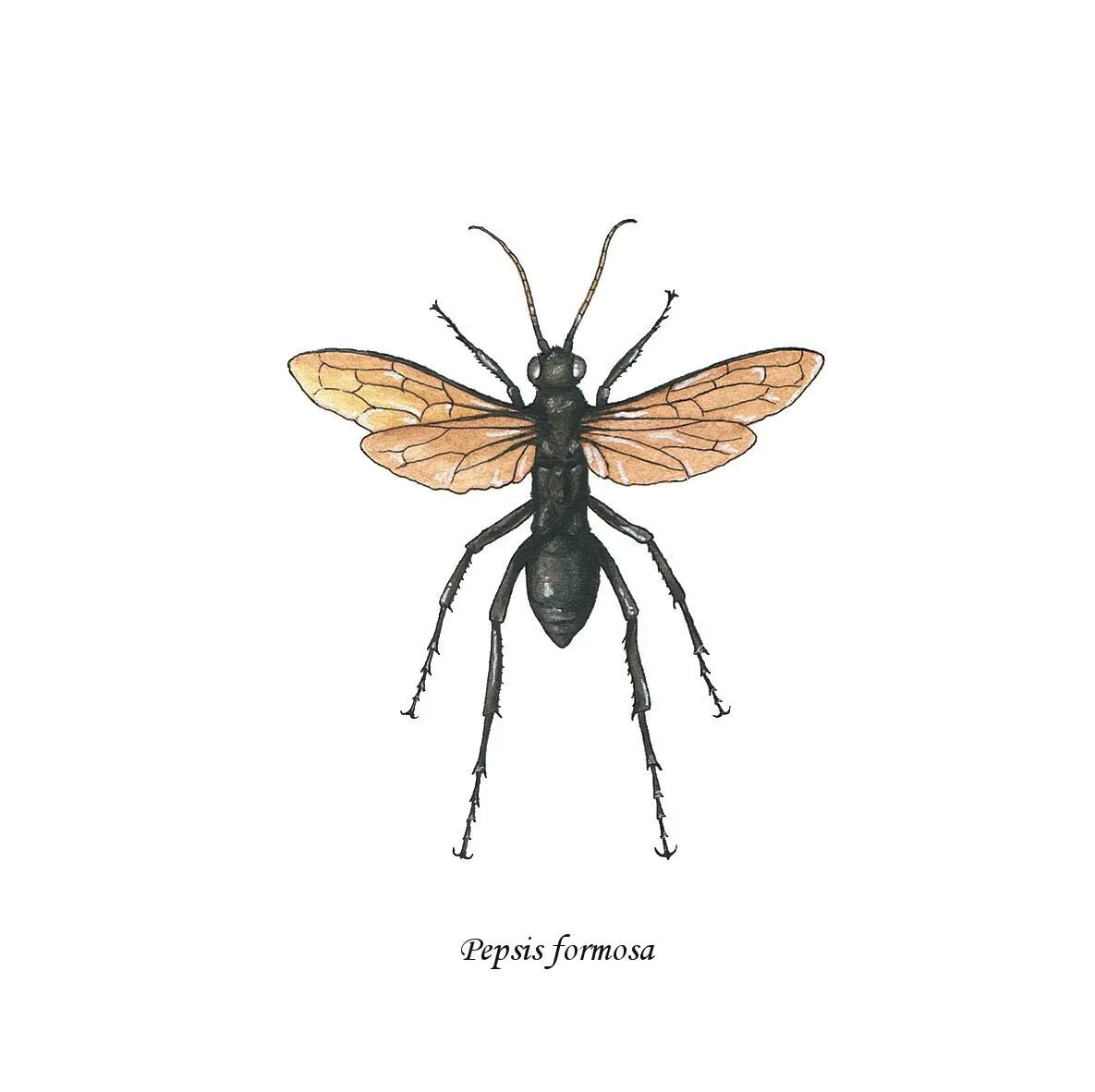
What is a Tarantula Hawk Wasp
The tarantula hawk wasp is a fascinating creature, renowned for its incredibly painful sting and its unusual hunting habits. These wasps are solitary, meaning they don’t live in colonies like bees or social wasps. They are large, typically measuring up to two inches in length, and are known for their striking appearance. Most species have a black or blue-black body with orange wings, which makes them easily recognizable. Their primary food source is tarantulas, which they paralyze with their sting and then use as a host for their larvae. This guide will provide you with the information to draw this amazing insect, providing you with the ability to create a visual representation that does justice to this remarkable creature.
Understanding the Anatomy
Before you begin drawing, it’s crucial to understand the basic anatomy of a tarantula hawk wasp. This will help you accurately represent the insect’s form and details. Familiarizing yourself with the different parts of the wasp, such as the body structure, legs, antennae, and wings, will be key to a successful drawing. Paying attention to the proportions and the way these elements are connected will enhance the realism of your artwork. The following sections will break down each part, providing you with a detailed understanding for your drawing.
Body Structure

The tarantula hawk wasp’s body is divided into three main segments: the head, the thorax (middle section), and the abdomen (rear section). The head is relatively small and houses the eyes, antennae, and mouthparts. The thorax is the largest segment and supports the legs and wings. The abdomen is elongated and segmented. Observing the proportions and the way these sections connect will ensure your drawing is anatomically correct. Notice the slight curve of the abdomen and the robust build of the thorax, which houses the powerful muscles needed for flight.
Legs and Antennae
Tarantula hawk wasps have six legs, each with multiple segments, allowing for flexibility and grip. These legs are crucial for walking and also for holding onto prey. They also possess two long, segmented antennae on their head, which are used for sensing their environment. These antennae are important for detecting pheromones, locating tarantulas, and other sensory functions. When drawing, pay close attention to the way the legs are positioned and the shape and length of the antennae. Slight differences in these details contribute significantly to the insect’s overall appearance.
Wings
The tarantula hawk wasp has two pairs of wings, which are typically a vibrant orange color. These wings are transparent, but they may also have a slight iridescent sheen depending on the light. The shape of the wings is elongated, and the veins within the wings are visible. When drawing the wings, note their shape and how they are attached to the thorax. Consider how light might pass through the wings to create a more realistic effect. Capturing the details of the wings will add to the overall impact of your drawing, making the wasp look dynamic and ready for flight.
Step-by-Step Drawing Guide

Now that you understand the anatomy, let’s move on to the drawing process. This step-by-step guide will help you draw a tarantula hawk wasp, from the initial sketch to the final details. You’ll learn how to break down the process into manageable steps, making it easier to create a detailed and accurate drawing. Each step builds on the previous one, ensuring you develop a solid understanding of the form and structure of the wasp. Take your time and enjoy the process; with practice, you’ll be able to draw a tarantula hawk wasp with confidence.
Sketching the Basic Body Shape
Start by lightly sketching the basic shapes of the wasp’s body. Begin with a rounded shape for the head, a larger, more cylindrical shape for the thorax, and an elongated, slightly curved shape for the abdomen. These initial shapes will serve as the foundation for your drawing. Ensure the proportions are correct from the start. Use light lines to avoid making it difficult to erase and make corrections as you progress. Take a moment to step back and check the overall balance before proceeding to the next step.
Adding Details to the Body
Once you have the basic shapes in place, start adding details to the body. Define the segments of the abdomen and the thorax. Add the small details on the head such as the eyes and mouthparts. Remember that these wasps have a tough exoskeleton, so consider adding some slight texture to your drawing to represent this. Lightly shade the body to give it a sense of dimension. Pay attention to the curves and contours of the body, which will help to give your drawing a three-dimensional appearance. Careful attention to detail at this stage will greatly enhance the realism of the final piece.
Drawing the Legs and Antennae

Now it’s time to draw the legs and antennae. Start with the legs, sketching the basic shape and position of each. Remember, there are six legs, three on each side of the thorax. The legs have multiple segments and end with claws. Draw the antennae, which are long and segmented, extending from the head. Position them accurately and with the correct curve. Pay attention to the way the legs connect to the thorax and how they are positioned for balance and movement. These features are crucial to giving the insect a natural appearance, making it look like a living creature.
Adding the Wings
Next, add the wings. Draw the general shape of the wings, keeping in mind their elongated form and the veins within the wings. These wings will have an orange hue. Notice the way they are attached to the thorax, and consider the angle at which they extend. Use light shading to indicate the transparency of the wings. The veins can be drawn with fine lines, adding detail and realism to your drawing. Capturing the wings correctly is a key part of conveying the dynamism and beauty of the tarantula hawk wasp.
Refining the Drawing and Adding Color
Refine your drawing by adding details and shading. This is the stage where you bring your drawing to life. Darken lines where needed to define the shape. Add more texture to the exoskeleton and refine the details of the eyes, legs, and antennae. Introduce color, using orange for the wings and a dark color like black or blue-black for the body. Experiment with different shading techniques to create depth and dimension. Consider the light source and how it affects the shadows and highlights. At this point, you want to ensure that every element of the drawing is working together to create a cohesive, realistic representation of the tarantula hawk wasp.
Tips for a Realistic Look

Achieving a realistic look involves paying attention to detail and using various techniques. This section will cover techniques to improve the quality of your drawing, allowing you to draw a realistic tarantula hawk wasp. By incorporating these techniques, you can enhance the realism and visual appeal of your artwork.
Light and Shadow
Understanding light and shadow is crucial for creating a realistic drawing. Identify the light source and use shading to indicate how light falls on the wasp’s body. Areas facing the light source will be lighter, while areas away from the light source will be darker. Use shading techniques like cross-hatching or blending to create smooth transitions between light and shadow. The contrast between light and shadow will add dimension and depth, making your drawing appear three-dimensional. Practice this concept, and you’ll see a noticeable improvement in the realism of your drawings.
Texture
Adding texture can significantly enhance the realism of your drawing. The exoskeleton of the tarantula hawk wasp has a slightly rough texture. To create this, use small, short strokes or stippling to suggest the texture. Vary the density of the strokes to create areas of highlights and shadows. Consider the texture of the wings, which have veins that can be represented with fine lines. Experiment with different techniques to achieve the desired texture and bring your drawing to life.
Common Mistakes and How to Avoid Them

Even experienced artists make mistakes. Knowing the common pitfalls and how to avoid them will improve your drawing skills. Here are some of the most common mistakes and some suggestions for avoiding them.
Poor Proportions: The most common mistake is getting the proportions wrong. Make sure you measure the body parts correctly, and compare the size of one segment to another. Start with a light sketch and check the sizes repeatedly. Incorrect Anatomy: This will make the wasp look unnatural. Study references, and understand the anatomy before starting your drawing. Pay close attention to how the legs connect to the body. Lack of Detail: Underestimating the details of the wasp. Take your time to draw the details.