What are Tarantula Hawks
Tarantula hawks are among the largest wasps on Earth, renowned for their striking appearance and formidable sting. These impressive insects belong to the Pompilidae family and are primarily solitary wasps. They are named for their unique behavior of preying on tarantulas. The tarantula hawk’s life centers around its interaction with these large spiders, using them as a host for their larvae. Their presence is a fascinating aspect of various ecosystems. Tarantula hawks are not just visually stunning, but they also play a crucial role in their environment, acting as natural population controllers for tarantulas. Understanding these creatures requires acknowledging their lifecycle, habitat, and ecological significance. The tarantula hawk provides an interesting example of predator-prey relationships in nature and the adaptations that allow for survival in a challenging environment.
Physical Characteristics
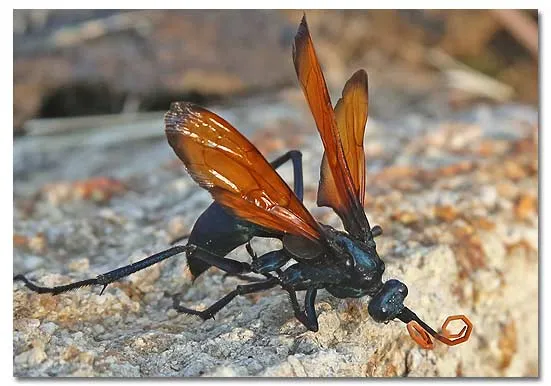
Tarantula hawks are easily recognizable due to their large size and distinct coloration. Females are larger than males, often reaching lengths of up to two inches. Their bodies exhibit a striking combination of black or dark blue and vibrant orange wings. The contrast between the dark body and the bright wings is a clear indication of a tarantula hawk. This bold coloration serves as a warning to potential predators. Their bodies are robust and built for strength, crucial for dragging tarantulas many times their size. The long legs and strong mandibles are additional key features, aiding in their hunting and nest-building behaviors. Observing these physical attributes provides important clues to understanding their lifestyle and ecological function. Their impressive physique reflects their role as apex predators in their ecosystem.
Where Do They Live

Tarantula hawks thrive in warm climates, predominantly found in arid and semi-arid regions. In the United States, they are commonly spotted across the southwestern states, including California, Arizona, New Mexico, and Texas. Their geographical distribution often aligns with that of their primary prey tarantulas. They also exist in areas of South America, Australia, and Southeast Asia. These wasps prefer environments that offer both sun exposure and sheltered nesting sites. Habitats range from deserts and grasslands to scrublands, where they can find tarantulas and appropriate conditions for mating and nesting. The specific distribution of the tarantula hawk in California includes the warmer, drier regions of the state. This habitat preference highlights the importance of understanding local ecosystems to spot these fascinating insects.
Identifying Tarantula Hawks in California
Identifying tarantula hawks in California requires knowing their habitat preferences and physical characteristics. The most reliable way to identify a tarantula hawk is by their size and coloration, but also by the distinctive behavior. They are most active during the day, especially during the warmer months. Keep an eye out for the striking combination of a dark body and orange wings while hiking or exploring areas known for tarantula activity. Listen for their characteristic buzzing sound, which is often a sign they are nearby. It is important to avoid disturbing them, as they are not aggressive unless provoked. Their presence indicates a healthy ecosystem, rich in both tarantulas and other insect life. Remember to observe from a safe distance to appreciate their unique beauty and behavior without risk.
Habitat and Behavior
In California, tarantula hawks typically inhabit regions with a high tarantula population. These areas often include grasslands, deserts, and chaparral environments. The wasps are frequently seen in the open sun, searching for tarantulas to paralyze. Their behavior is characterized by diligent hunting and nest-building. The female wasps search for a tarantula, which they paralyze with a sting. They then drag the spider to a burrow or nest, lay an egg on the tarantula, and seal it. The wasp larvae feed on the paralyzed spider, eventually growing into adults. The hunting and nesting behavior are crucial for reproduction and maintaining their place in the food web. Their behavior is most active during the warmer parts of the year.
What to Watch Out For

While admiring tarantula hawks, it’s important to know how to spot them and be aware of potential dangers. The primary risk comes from their sting, which is infamously known for its excruciating pain. Although the sting is not deadly, it is highly unpleasant and can cause intense pain for several minutes. Be cautious when near potential habitats. Avoid getting too close, especially during their active hunting periods. The wasps can be particularly aggressive if they feel threatened. It’s important to identify potential nesting sites, typically burrows or crevices in the ground, to minimize the chances of unexpected encounters. Always respect the space of these insects. Be prepared to move away slowly if you notice them approaching. Your safety and the well-being of these creatures depend on responsible observation and awareness of their behaviors.
How to Avoid Being Stung
Preventing a sting from a tarantula hawk involves following simple precautions. Firstly, avoid provoking the wasps. They are generally not aggressive unless threatened. Secondly, wear protective clothing when you are in known habitats. This includes long sleeves, pants, and closed-toe shoes, especially during the active season. Thirdly, learn to identify potential nesting locations to stay clear of these areas. If you encounter a tarantula hawk, maintain a safe distance and move away slowly. Avoid sudden movements that may startle them. If you get stung, seek immediate medical attention if you experience any allergic reactions. While the sting is painful, it’s not typically life-threatening. Careful observation and avoidance are the most effective measures to protect yourself and appreciate these incredible insects responsibly.
The Tarantula Hawk’s Life Cycle
The life cycle of a tarantula hawk is a fascinating display of nature’s complexity. The process begins with the adult female hunting for a tarantula. Once located, she paralyzes the spider with a sting, injecting venom that disables it but keeps it alive. The wasp then drags the paralyzed tarantula to a pre-excavated burrow or a prepared nest, often a hole in the ground or in a tree cavity. After securing the spider, the wasp lays a single egg on the tarantula’s abdomen. The wasp larva hatches from the egg and begins to feed on the still-living spider, consuming it gradually. After the larva has finished feeding, it spins a cocoon and pupates within the spider’s burrow. Finally, the adult tarantula hawk emerges from the cocoon, starting the cycle all over again. The entire process, from egg to adult, typically takes several months, depending on environmental conditions and the availability of tarantulas.
Mating and Nesting

Mating usually takes place after the wasps emerge from their pupal stage. Males often patrol areas in search of females. Once a female is found, mating occurs, after which the female begins the process of nesting and hunting. The female wasp is responsible for the construction of the nest, typically in the ground. She digs a burrow or uses a pre-existing cavity. She then hunts for a tarantula to provision the nest. After paralyzing the tarantula, the wasp drags the spider to the nest, where she lays a single egg on the spider’s abdomen. Once the egg is laid, the nest is sealed. The larva will develop in this protected environment, feeding on the paralyzed tarantula. The nesting behavior showcases the intricate balance of nature. This behavior also highlights the wasp’s role in the ecosystem. The selection of nesting sites is critical. The location must protect the developing larva from predators and harsh environmental conditions.
Hunting and Paralysis
Hunting is a crucial part of the tarantula hawk’s life cycle, performed exclusively by the female. The process begins with the wasp searching for a suitable tarantula. They hunt in areas where tarantulas are known to live. When a tarantula is located, the wasp engages in a dramatic confrontation. The wasp will sting the tarantula, injecting venom that paralyzes the spider. The precision of the sting is important, as it must immobilize the spider without killing it. Once the tarantula is paralyzed, the wasp drags it to a pre-dug burrow or a protected location for nesting. This dragging process is physically demanding, often requiring the wasp to maneuver the spider over long distances. The paralyzed tarantula serves as a living larder for the wasp larva. The hunting and paralysis behaviors are remarkable adaptations. These behaviors contribute to the tarantula hawk’s survival and its role in the ecosystem.
The Importance of Tarantula Hawks
Tarantula hawks hold significant importance in their ecosystems, contributing in several ways. Primarily, they play a role in regulating tarantula populations, which affects the balance of other species within the habitat. They also serve as a food source for other animals, including birds and larger insects, thus contributing to the food web. The wasps are pollinators, though not as significant as bees, they do contribute to pollination during their foraging activities. Their presence indicates a healthy ecosystem, particularly in arid and semi-arid regions. The tarantula hawk is also a symbol of nature’s complexity. Their study contributes to scientific knowledge about predator-prey relationships and insect behavior. Their importance extends beyond their ecological role, influencing cultural and educational contexts. Recognizing their value encourages conservation efforts to protect both the wasp and its habitat.
Ecological Role

The ecological role of tarantula hawks is crucial to the stability of their habitats. They act as a natural control for tarantula populations. By parasitizing tarantulas, they prevent overpopulation. This in turn helps to maintain the balance within the ecosystem. They also influence the diversity of species. By preying on tarantulas, they prevent any one species from dominating the habitat. The hawks also contribute to the flow of energy within the food web. They provide food for other predators. Furthermore, they contribute to the decomposition process. The tarantula hawks provide insights into predator-prey dynamics and the mechanisms that keep ecosystems in balance. Understanding their ecological role emphasizes the need for conservation. This will help to protect both the tarantula hawk and its native habitats.
Conservation Status
Currently, the conservation status of tarantula hawks is generally considered stable. They are not currently listed as endangered or threatened. However, their populations may face challenges due to habitat loss and environmental changes. Habitat destruction, particularly due to urbanization and agricultural expansion, poses a significant threat. The use of pesticides can also indirectly affect tarantula hawks by reducing their food source. Climate change and its effects on their environments may lead to changes in their distribution and abundance. Conservation efforts include the protection of natural habitats, responsible land management practices, and raising public awareness about their ecological importance. Monitoring their populations and the health of their habitats will ensure the continued survival of the tarantula hawk. Preserving their environments is essential for maintaining biodiversity. This effort will also support the health of the ecosystems in which they live.